Restaurant Analysis of Swiggy
Analysed Swiggy's restaurant data across cities, cuisines, pricing, ratings and delivery performance to surface insights for vendor strategy, logistics and customer targeting.
Tools :
Power BI, Power Query, DAX
Techniques :
DAX measures, Correlation analysis, Geographical mapping
Dataset :
8,680 records
Tools :
Power BI, Power Query, DAX
Dataset :
8,680 records
Techniques :
DAX measures, Correlation analysis, Geographical mapping

Problem :
Swiggy's restaurant data spanning ratings, cuisines, pricing and delivery times existed in disconnected form, obscuring patterns critical to vendor onboarding, delivery optimization and customer targeting.
Approach :
Profiled 8,680 records, resolving missing values across price, rating and delivery fields; built calculated columns for Price Range bands and Rating Categories.
Built DAX measures for Top-Rated Spots%, Average Ratings, Total Restaurants and Unique Cuisines.
Designed 3 interactive dashboards completing all 14 business tasks from geographical mapping to correlation analysis, structured for both strategic and operational teams.
WHAT DATA DELIVERS:
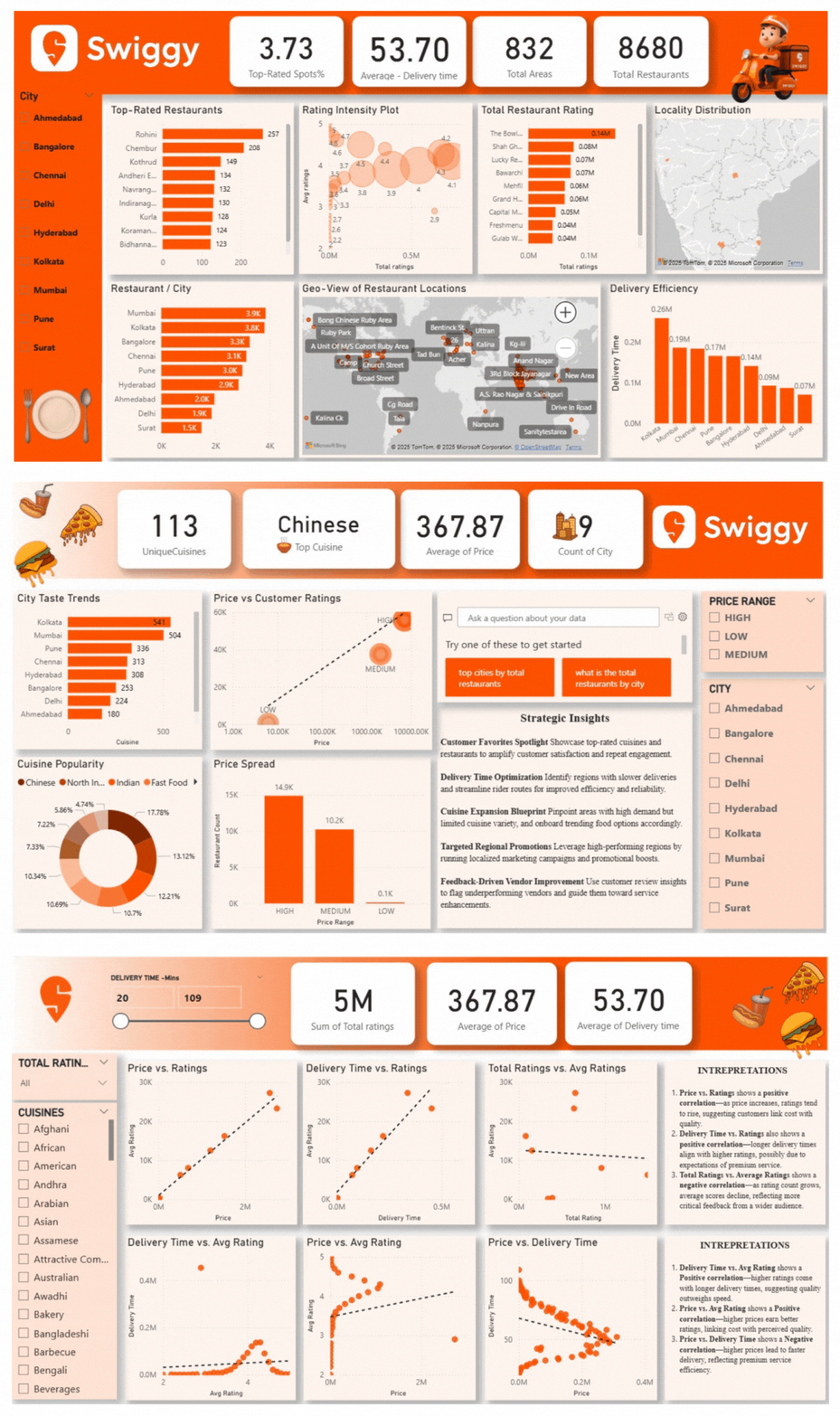
Kolkata (1,346) and Mumbai (1,277) dominate restaurant density, the highest-priority markets for vendor scaling and regional marketing.
Only 3.73% of restaurants score above 4.5; 96.27% fall below the premium threshold, directly informing vendor quality improvement programs.
Chinese leads with 2,816 restaurants vs North Indian (2,077) and Indian (1,934), a data-backed prioritization framework for menu curation and promotions.
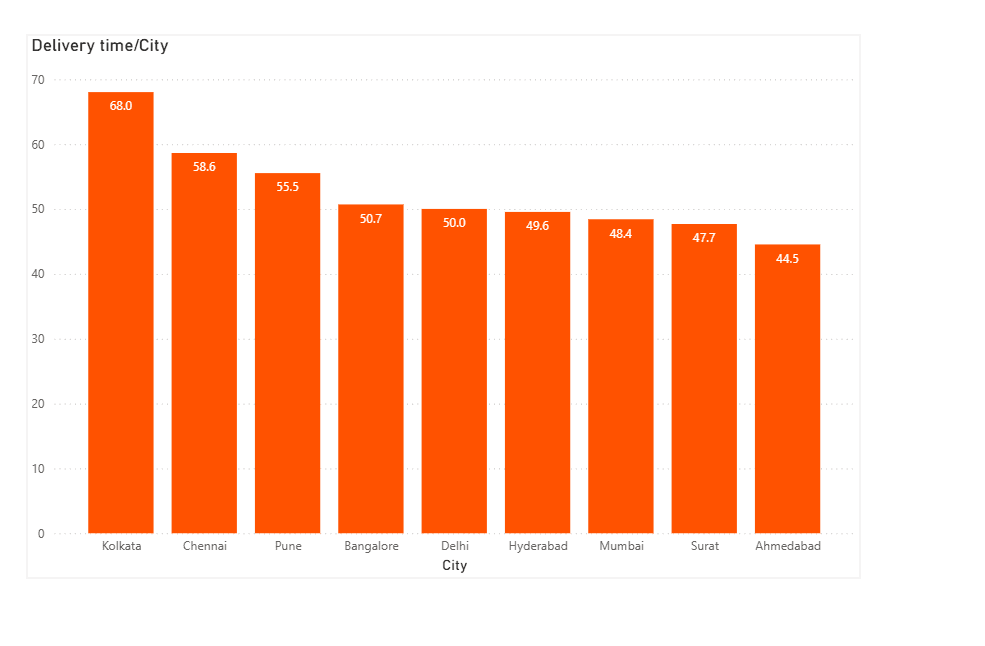
Average delivery time is 53.70 minutes — combined with pricing-rating correlation, this reveals where speed gaps most impact satisfaction
Delivery time shows a positive correlation with ratings; customers in slower-paced areas rate higher, making optimization strategy city-specific, not blanket.
Higher price tiers correlate with better ratings and faster delivery with direct implications for how Swiggy structures premium vendor partnerships.
Growth Note :
Next iteration: Time-series tracking of city-level density and rating shifts from static snapshot to dynamic vendor
health monitor.
Next iteration: time-series tracking of city-level density and rating shifts from static snapshot to dynamic vendor health monitor.
github link
More Projects
Power BI
8,000+ records across multi-outlet retail data
BlinkIt – A Retail Intelligence
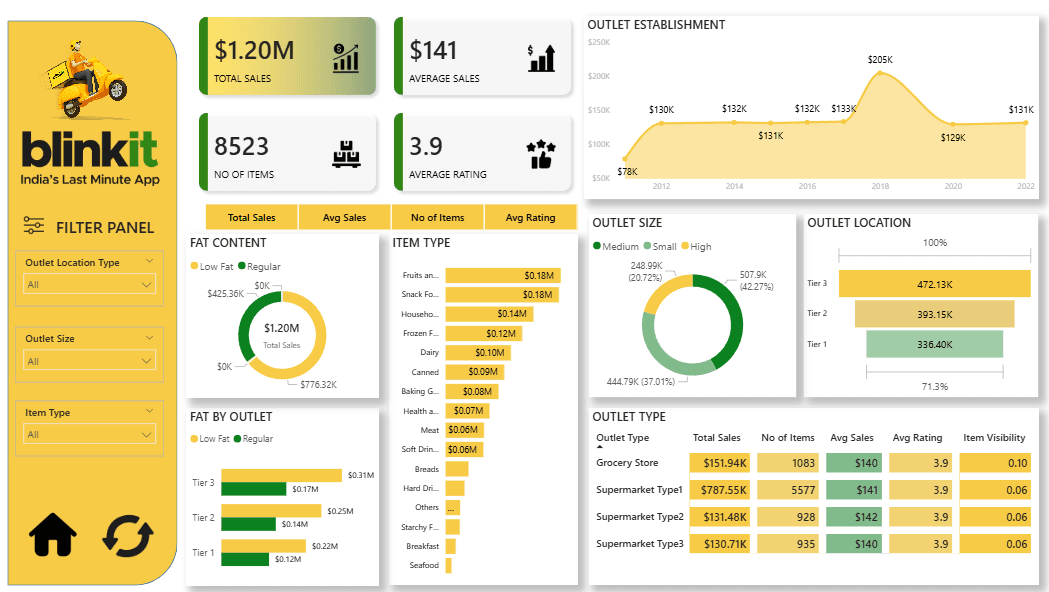
Transformed 8,000+ retail records to find newer outlets generate 68% higher sales, redefining outlet benchmarking and inventory strategy.
Techniques: DAX measures, KPI design, Dynamic slicers
Outcome:
Delivered strategic insights and recommendations impacting sales, inventory, and customer strategy
Power BI
6,000+ movie titles
Disney+ Hotstar Data Analysis
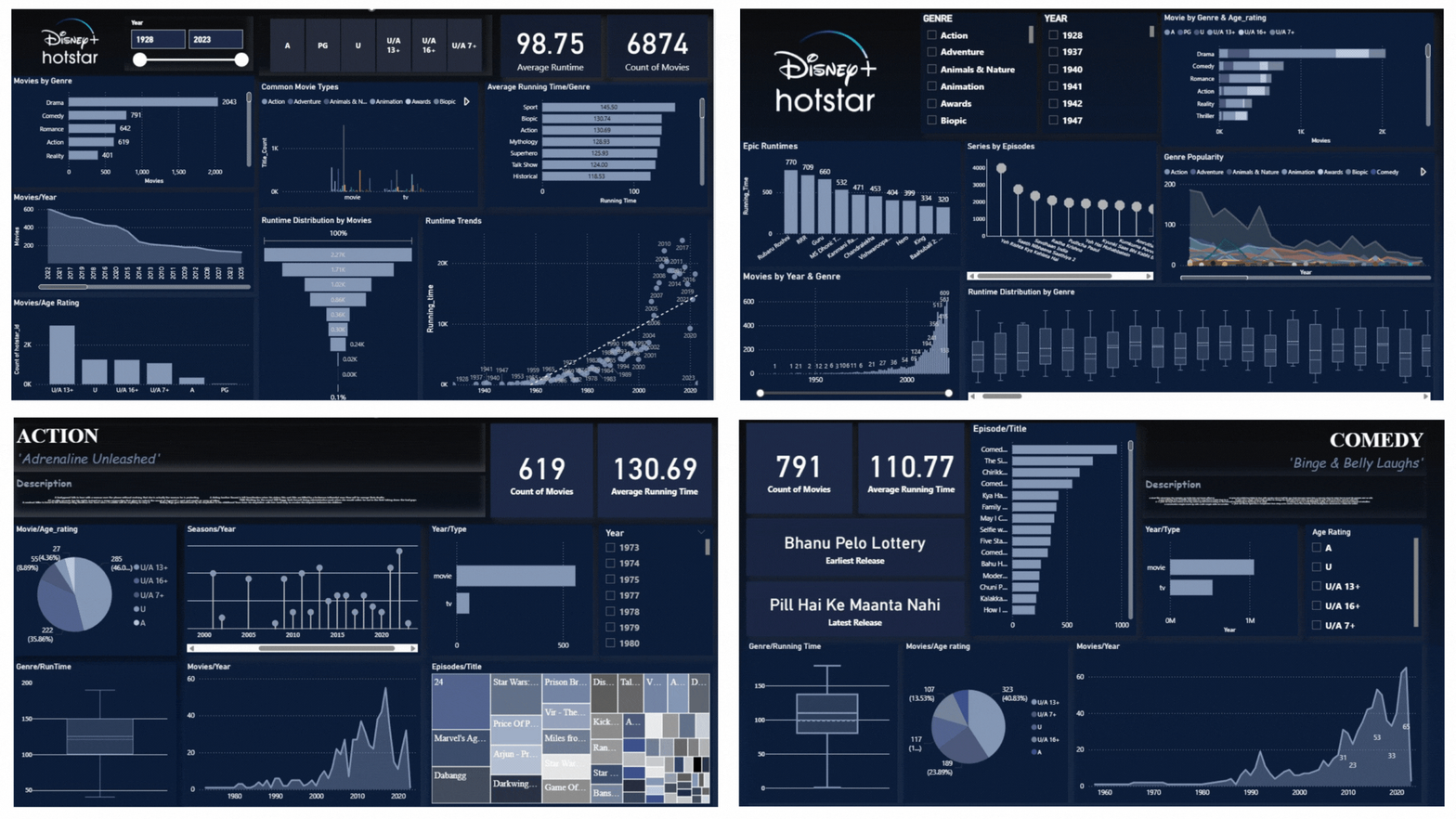
Mapped 6,874 titles across 37 genres to reveal 43% of Hotstar's catalogue targets U/A 13+, uncovering an underserved kids and family content gap.
Techniques: DAX measures, Genre segmentation, Runtime binning, Correlation analysis
Outcome:
Delivered strategic insights and recommendations impacting content strategy, marketing, and audience engagement
More Projects
Power BI
8,000+ records across multi-outlet retail data
BlinkIt – A Retail Intelligence
Transformed 8,000+ retail records to find newer outlets generate 68% higher sales, redefining outlet benchmarking and inventory strategy.
Techniques: DAX measures, KPI design, Dynamic slicers
Outcome:
Delivered strategic insights and recommendations impacting sales, inventory, and customer strategy
Power BI
6,000+ movie titles
Disney+ Hotstar Data Analysis
Mapped 6,874 titles across 37 genres to reveal 43% of Hotstar's catalogue targets U/A 13+, uncovering an underserved kids and family content gap.
Techniques: DAX measures, Genre segmentation, Runtime binning, Correlation analysis
Outcome:
Delivered strategic insights and recommendations impacting content strategy, marketing, and audience engagement
Restaurant Analysis of Swiggy
Analysed Swiggy's restaurant data across cities, cuisines, pricing, ratings and delivery performance to surface insights for vendor strategy, logistics and customer targeting.
Tools :
Power BI, Power Query, DAX
Techniques :
DAX measures, Correlation analysis, Geographical mapping
Dataset :
8,680 records
Tools :
Power BI, Power Query, DAX
Dataset :
8,680 records
Techniques :
DAX measures, Correlation analysis, Geographical mapping
Problem :
Swiggy's restaurant data spanning ratings, cuisines, pricing and delivery times existed in disconnected form, obscuring patterns critical to vendor onboarding, delivery optimization and customer targeting.
Approach :
Profiled 8,680 records, resolving missing values across price, rating and delivery fields; built calculated columns for Price Range bands and Rating Categories.
Built DAX measures for Top-Rated Spots%, Average Ratings, Total Restaurants and Unique Cuisines.
Designed 3 interactive dashboards completing all 14 business tasks from geographical mapping to correlation analysis, structured for both strategic and operational teams.
WHAT DATA DELIVERS:
Kolkata (1,346) and Mumbai (1,277) dominate restaurant density, the highest-priority markets for vendor scaling and regional marketing.
Only 3.73% of restaurants score above 4.5; 96.27% fall below the premium threshold, directly informing vendor quality improvement programs.
Chinese leads with 2,816 restaurants vs North Indian (2,077) and Indian (1,934), a data-backed prioritization framework for menu curation and promotions.
Average delivery time is 53.70 minutes — combined with pricing-rating correlation, this reveals where speed gaps most impact satisfaction
Delivery time shows a positive correlation with ratings; customers in slower-paced areas rate higher, making optimization strategy city-specific, not blanket.
Higher price tiers correlate with better ratings and faster delivery with direct implications for how Swiggy structures premium vendor partnerships.
Growth Note :
Next iteration: Time-series tracking of city-level density and rating shifts from static snapshot to dynamic vendor
health monitor.
Next iteration: time-series tracking of city-level density and rating shifts from static snapshot to dynamic vendor health monitor.
github link
More Projects
Power BI
8,000+ records across multi-outlet retail data
BlinkIt – A Retail Intelligence
Transformed 8,000+ retail records to find newer outlets generate 68% higher sales, redefining outlet benchmarking and inventory strategy.
Techniques: DAX measures, KPI design, Dynamic slicers
Outcome:
Delivered strategic insights and recommendations impacting sales, inventory, and customer strategy
Power BI
6,000+ movie titles
Disney+ Hotstar Data Analysis
Mapped 6,874 titles across 37 genres to reveal 43% of Hotstar's catalogue targets U/A 13+, uncovering an underserved kids and family content gap.
Techniques: DAX measures, Genre segmentation, Runtime binning, Correlation analysis
Outcome:
Delivered strategic insights and recommendations impacting content strategy, marketing, and audience engagement
More Projects
Power BI
8,000+ records across multi-outlet retail data
BlinkIt – A Retail Intelligence
Transformed 8,000+ retail records to find newer outlets generate 68% higher sales, redefining outlet benchmarking and inventory strategy.
Techniques: DAX measures, KPI design, Dynamic slicers
Outcome:
Delivered strategic insights and recommendations impacting sales, inventory, and customer strategy
Power BI
6,000+ movie titles
Disney+ Hotstar Data Analysis
Mapped 6,874 titles across 37 genres to reveal 43% of Hotstar's catalogue targets U/A 13+, uncovering an underserved kids and family content gap.
Techniques: DAX measures, Genre segmentation, Runtime binning, Correlation analysis
Outcome:
Delivered strategic insights and recommendations impacting content strategy, marketing, and audience engagement
Restaurant Analysis of Swiggy
Analysed Swiggy's restaurant data across cities, cuisines, pricing, ratings and delivery performance to surface insights for vendor strategy, logistics and customer targeting.
Tools :
Power BI, Power Query, DAX
Techniques :
DAX measures, Correlation analysis, Geographical mapping
Dataset :
8,680 records
Tools :
Power BI, Power Query, DAX
Dataset :
8,680 records
Techniques :
DAX measures, Correlation analysis, Geographical mapping
Problem :
Swiggy's restaurant data spanning ratings, cuisines, pricing and delivery times existed in disconnected form, obscuring patterns critical to vendor onboarding, delivery optimization and customer targeting.
Approach :
Profiled 8,680 records, resolving missing values across price, rating and delivery fields; built calculated columns for Price Range bands and Rating Categories.
Built DAX measures for Top-Rated Spots%, Average Ratings, Total Restaurants and Unique Cuisines.
Designed 3 interactive dashboards completing all 14 business tasks from geographical mapping to correlation analysis, structured for both strategic and operational teams.
WHAT DATA DELIVERS:
Kolkata (1,346) and Mumbai (1,277) dominate restaurant density, the highest-priority markets for vendor scaling and regional marketing.
Only 3.73% of restaurants score above 4.5; 96.27% fall below the premium threshold, directly informing vendor quality improvement programs.
Chinese leads with 2,816 restaurants vs North Indian (2,077) and Indian (1,934), a data-backed prioritization framework for menu curation and promotions.
Average delivery time is 53.70 minutes — combined with pricing-rating correlation, this reveals where speed gaps most impact satisfaction
Delivery time shows a positive correlation with ratings; customers in slower-paced areas rate higher, making optimization strategy city-specific, not blanket.
Higher price tiers correlate with better ratings and faster delivery with direct implications for how Swiggy structures premium vendor partnerships.
Growth Note :
Next iteration: Time-series tracking of city-level density and rating shifts from static snapshot to dynamic vendor
health monitor.
Next iteration: time-series tracking of city-level density and rating shifts from static snapshot to dynamic vendor health monitor.
github link
More Projects
Power BI
8,000+ records across multi-outlet retail data
BlinkIt – A Retail Intelligence
Transformed 8,000+ retail records to find newer outlets generate 68% higher sales, redefining outlet benchmarking and inventory strategy.
Techniques: DAX measures, KPI design, Dynamic slicers
Outcome:
Delivered strategic insights and recommendations impacting sales, inventory, and customer strategy
Power BI
6,000+ movie titles
Disney+ Hotstar Data Analysis
Mapped 6,874 titles across 37 genres to reveal 43% of Hotstar's catalogue targets U/A 13+, uncovering an underserved kids and family content gap.
Techniques: DAX measures, Genre segmentation, Runtime binning, Correlation analysis
Outcome:
Delivered strategic insights and recommendations impacting content strategy, marketing, and audience engagement
More Projects
Power BI
8,000+ records across multi-outlet retail data
BlinkIt – A Retail Intelligence
Transformed 8,000+ retail records to find newer outlets generate 68% higher sales, redefining outlet benchmarking and inventory strategy.
Techniques: DAX measures, KPI design, Dynamic slicers
Outcome:
Delivered strategic insights and recommendations impacting sales, inventory, and customer strategy
Power BI
6,000+ movie titles
Disney+ Hotstar Data Analysis
Mapped 6,874 titles across 37 genres to reveal 43% of Hotstar's catalogue targets U/A 13+, uncovering an underserved kids and family content gap.
Techniques: DAX measures, Genre segmentation, Runtime binning, Correlation analysis
Outcome:
Delivered strategic insights and recommendations impacting content strategy, marketing, and audience engagement